
How Professional Flat Irons Are Made in an OEM Factory
The hair straightener manufacturing process determines product safety, heating performance, durability and repeat-order consistency.
If you are sourcing flat irons for a private label or OEM project, understanding each factory step helps you evaluate suppliers, sample quality, lead times and quality control before mass production.
This guide walks through the real manufacturing process step by step, from product engineering and plate preparation to assembly, testing, packaging and shipment.
1. Product Design & Engineering (Where Everything Starts)
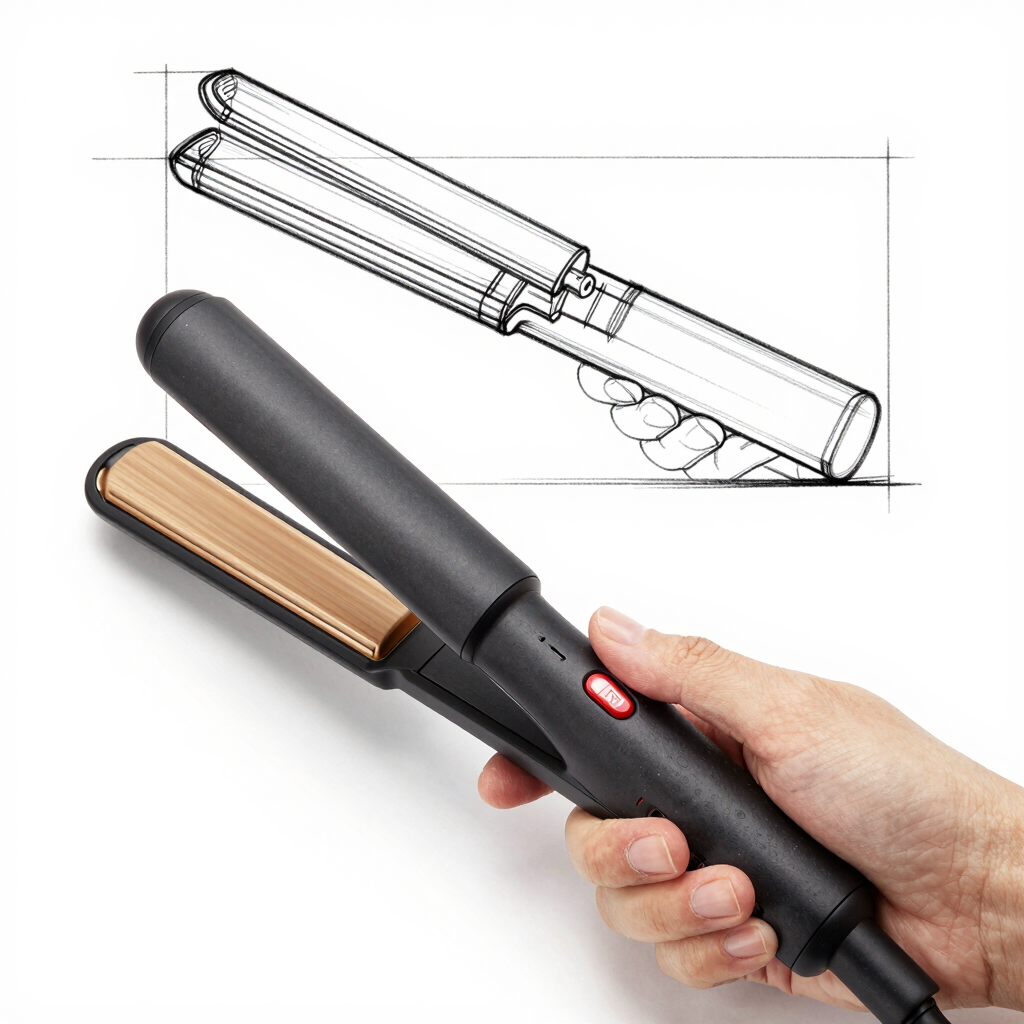
Before any material is cut or assembled, the process starts with engineering.
This stage defines:
Plate material (ceramic, titanium, etc.)
Heating system (PTC or MCH)
Temperature range and control logic
Housing structure and ergonomics
In better factories, this includes thermal simulation and safety validation — not just industrial design.
👉 This is where many low-cost products already fall behind: they skip deep engineering and go straight to copying existing models.
The hair straightener manufacturing process starts with innovative design and engineering.
2. Raw Material Preparation (Quality Starts Here)
In the hair straightener manufacturing process, raw materials are prepared with the utmost care.
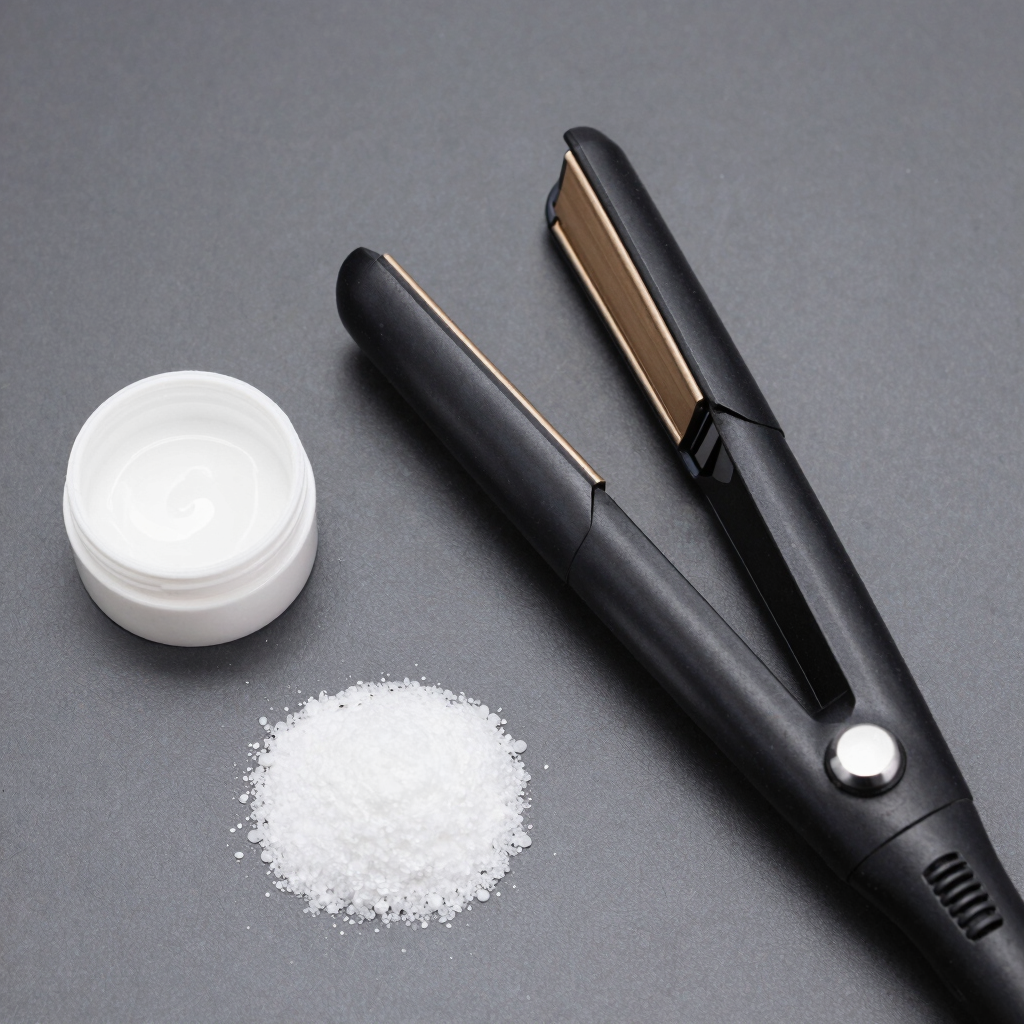
The main materials include:
Heating plates (ceramic, titanium, coated aluminum)
Heating elements (PTC/MCH)
PCB and temperature control chips
Plastic housing (usually heat-resistant nylon or PC)
A detail many buyers overlook:
Material grade directly impacts lifespan.
For example:
Low-grade plastics deform under heat
Poor coatings wear off quickly
Cheap heating elements lose stability over time
Heating Plate Production (The Core Component)
This is arguably the most critical step.
The process typically involves:
Base plate shaping (aluminum or solid ceramic)
Surface polishing (to ensure smooth glide)
Coating application (ceramic glaze, tourmaline, nano-coating)
High-temperature curing
The difference between average and premium products often shows up here:
Uneven coating → hair pulling
Poor polishing → friction
Weak adhesion → coating peeling after months
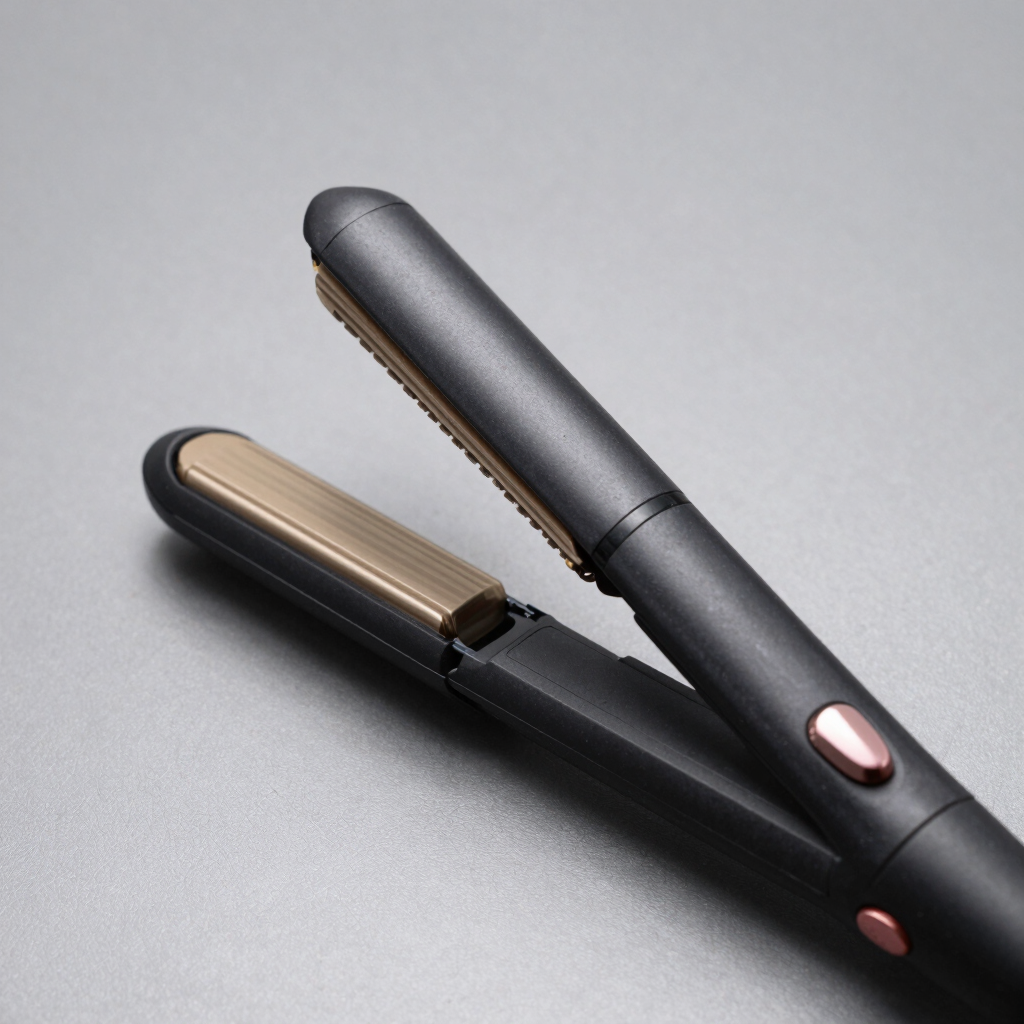
The heart of the hair straightener manufacturing process is the heating plate production.
4. Heating System Integration
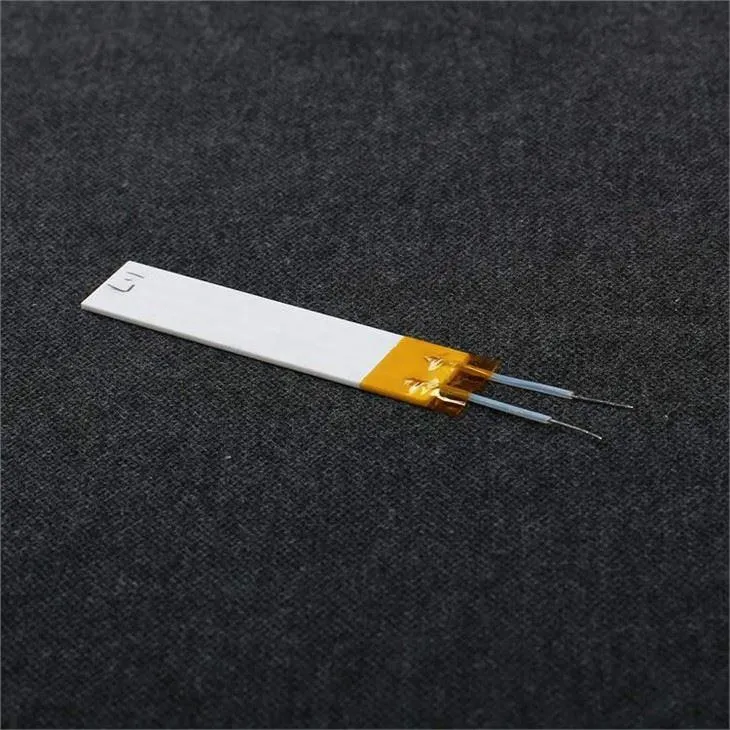
The heating element is installed beneath or inside the plate.
Key steps:
Fixing the heating element securely
Adding thermal insulation layers
Integrating temperature sensors (NTC/PTC feedback)
Precision matters here.
A poorly installed heating system can cause:
Temperature fluctuation
Hot spots
Safety risks
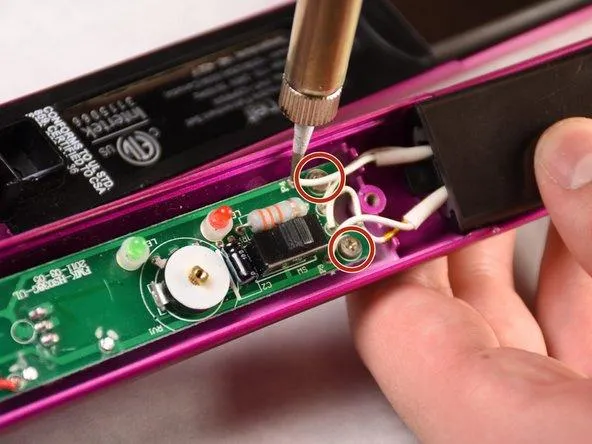
5. PCB Assembly & Wiring
This is the “brain” of the product.
The PCB controls:
Temperature adjustment
Heat stability
Auto shut-off
Safety protection
The hair straightener manufacturing process requires precision integration of the heating system.
In higher-end models, you’ll see:
Microcontroller-based control
More precise temperature calibration
Faster response time
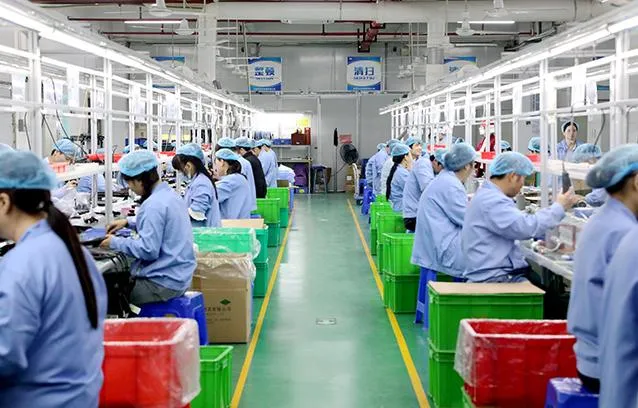
6. Final Assembly (Where Everything Comes Together)
At this stage, all components are assembled:
Plates + heating system
PCB + wiring
Housing + hinge mechanism
Power cord (often 360° swivel)
Consistency is key.
Even with good components, poor assembly can lead to:
Misaligned plates
Loose wiring
Short product lifespan
7. Quality Control & Testing
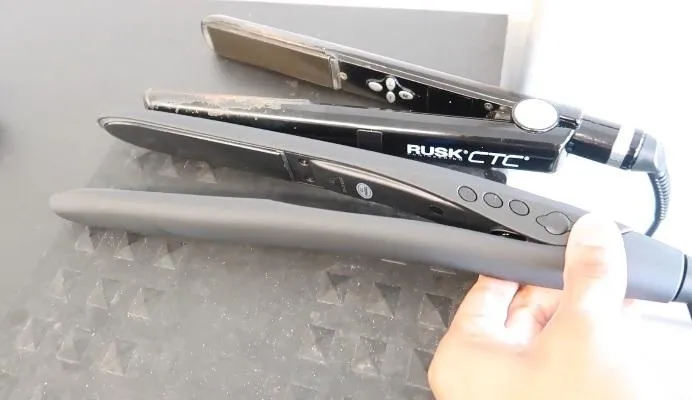
Reliable factories don’t just test randomly — they follow structured QC procedures:
The final assembly in the hair straightener manufacturing process ensures all components fit perfectly.
Typical tests include:
Temperature accuracy test
Heat-up time test
Drop test
Cable bending test
Aging test (continuous operation)
👉 Skipping proper QC is one of the main reasons for high return rates in low-cost products.
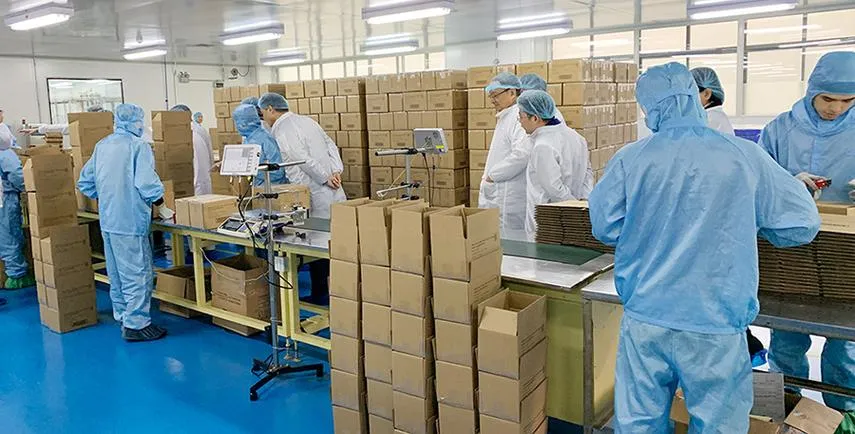
8. Packaging & Final Inspection
Before shipment:
Visual inspection
Function re-check
Aging test
Packaging (OEM/Private Label customization)
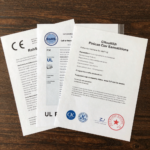
For export markets, this stage also ensures compliance with:
CE / FCC / RoHS
Voltage requirements (110V / 220V)
Why This Process Matters More Than You Think
Many buyers assume all factories follow similar processes.
In reality:
👉 The steps are similar, but execution quality is completely different.
The biggest gaps usually come from:
Plate production quality
Heating system precision
QC standards
These directly affect:
Product performance
Customer satisfaction
Brand reputation
A hair straightener may look simple from the outside, but behind it is a multi-step manufacturing process that requires real engineering, not just assembly.
If you’re building a brand or sourcing products, understanding this process gives you a major advantage:
You know what to ask suppliers
You avoid low-quality shortcuts
You make better product decisions
And in a competitive market, that difference shows quickly.
FAQ
Q: What is the most important part of a hair straightener?
The heating plate and heating system are the most critical components.
Q: How long does it take to manufacture a hair straightener?Typically 15–30 days depending on order size and customization.
Q: What affects product quality the most?
Quality control is a vital part of the hair straightener manufacturing process.
Plate quality, heating stability, and quality control standards.
Knowing the hair straightener manufacturing process gives brands an edge in the market.
The hair straightener manufacturing process involves several key factors affecting quality.
Temperature stability is critical in the hair straightener manufacturing process.
The hair straightener manufacturing process varies significantly between brands.
Ultimately, the hair straightener manufacturing process determines product effectiveness.
Understanding the hair straightener manufacturing process will help you make better choices.
The hair straightener manufacturing process is crucial for ensuring product safety.
Related Posts
Explore SINOXA sourcing resources
Compare our hair styling tools, review OEM/ODM project requirements and quality control information, or send your model and market requirements for a quotation.